UK Defence Governance: A Before & After Case Study

Why Defence Matters
Defence exposes governance failure faster than any other function of state.
- Complexity is unavoidable
- Trade-offs are real
- Illusions are punished
By making defence explicitly governable, the Covenant demonstrates that modern UK governance can be rebuilt on transparency, accountability, and disciplined decision-making.


Summary
UK Defence is the hardest possible test of national governance.
The stakes are existential, trade-offs are unavoidable, and failure is often irreversible.
This case study demonstrates how UK Defence is currently governed implicitly, and how it would be governed explicitly under the Covenant for UK Governance using Multi-Criteria Decision Making (MCDM) as the governing method.
The purpose is not to prescribe defence policy, force structure, or spending levels. It is to demonstrate governability.
If governance reform works for Defence, it works anywhere.
Under the Covenant approach, defence strength is governed by force regeneration rates (e.g. ~10% annual growth), not by arbitrary percentages of GDP.
Defence Governance — Before (Status Quo)
1. Structural Reality
Defence responsibilities are concentrated within the Ministry of Defence, delivered through:
- Single-Service Commands (Royal Navy, British Army, Royal Air Force)
- Strategic Command
- Defence Equipment & Support (DE&S)
- Defence Science and Technology Laboratory (Dstl)
Observed characteristics:
- Service-centric optimisation
- Fragmented accountability between strategy, capability, readiness, and procurement
- Long planning cycles misaligned with threat tempo
2. Strategic Framing (Implicit)
UK defence activity is implicitly framed around:
- Deterrence by presence
- NATO burden-sharing
- Legacy force structures
- Periodic strategic reviews (SDSR, Integrated Review, IR Refresh)
However:
- There is no single, transparent framework governing trade-offs
- Threat prioritisation is political rather than analytical
- Strategy, capability, and industrial capacity are weakly coupled
3. Decision-Making Reality
Decisions are typically:
- Committee-driven
- Budget-constrained rather than risk-driven
- Sensitive to short-term political pressures
Consequences:
- Programme churn
- Cost escalation
- Acknowledged capability gaps only after emergence
- Chronic instability in defence procurement
4. Defence Industrial Base
- Transactional supplier relationships
- Unstable demand signals
- Sovereignty asserted rhetorically rather than contractually
- Skills erosion through stop-start programmes
5. Risk Treatment
Risk is:
- Poorly quantified
- Frequently collapsed into affordability
- Managed indirectly rather than governed explicitly
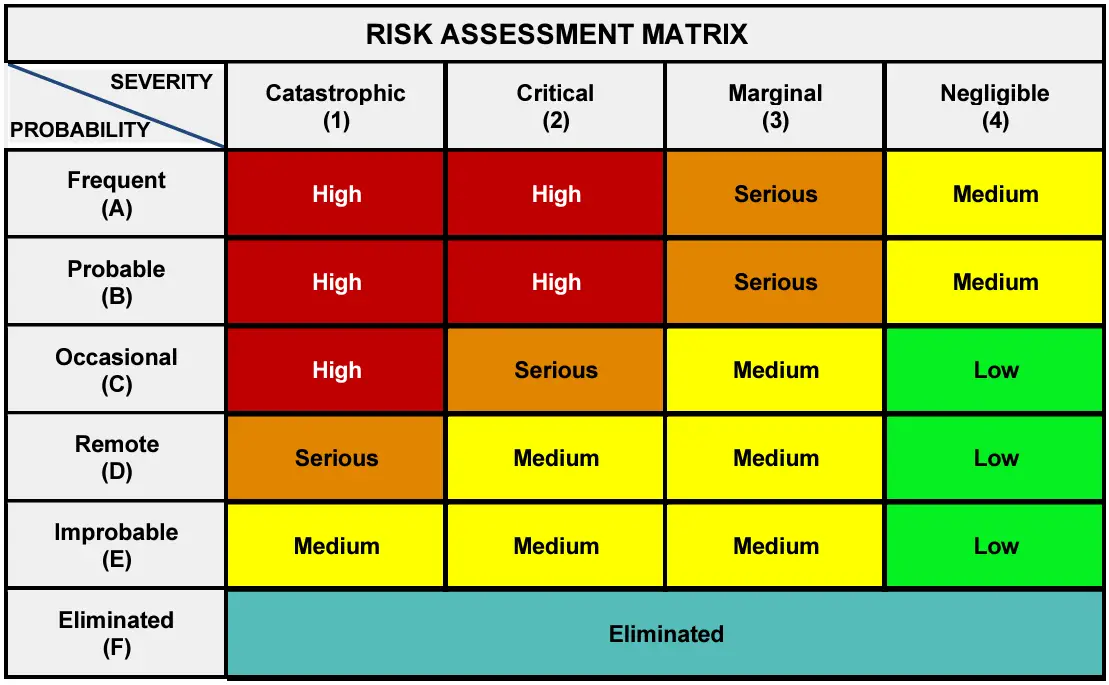
There is no coherent Defence Risk Register that transparently links:
threat × capability × readiness × resilience × industrial capacity
Defence Governance — After (Covenant + MCDM Model)

1. Explicit Defence Mission Architecture – After
Defence is governed through three explicit national missions:
A. Defend the Realm
- Territorial integrity
- Air, maritime, cyber, and space defence
- Protection against coercion and grey-zone threats
B. Deter and Shape Abroad
- Collective security
- Alliance credibility
- Forward presence and rapid response
C. Sustain Sovereign Capability
- Industrial resilience
- Skills continuity
- Technological edge
Each mission is governed explicitly — not assumed.
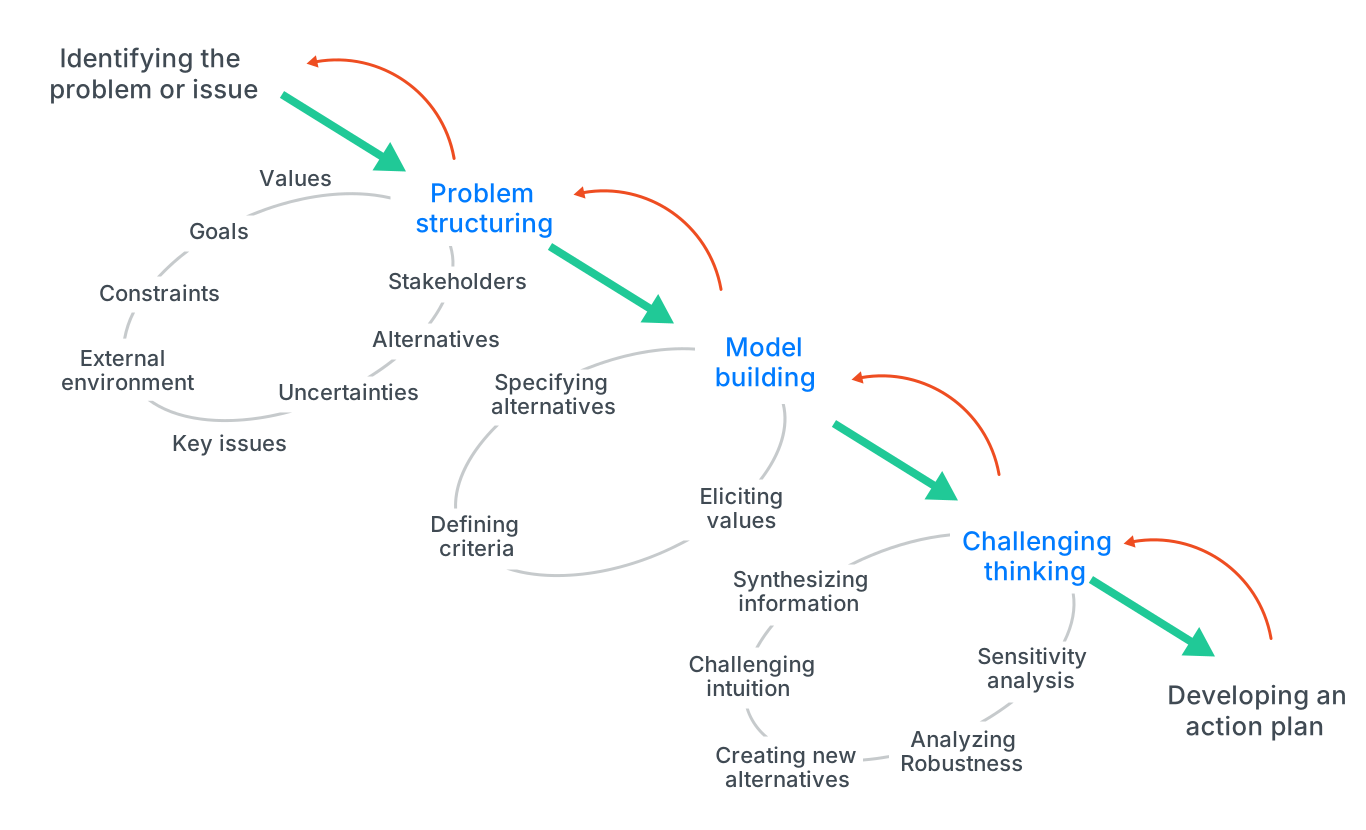
2. MCDM as the Governing Method – After
All major defence decisions are assessed using Multi-Criteria Decision Making, with criteria including:
- Threat severity
- Probability of occurrence
- Time to effect
- Reversibility
- Sovereign dependency
- Industrial resilience
- Knowledge / uncertainty
- Cost (treated strictly as a constraint)
This replaces the prevailing question:
“What can we afford?”
with:
“Which risks are unacceptable?”
Defence MCDM Diagram (Single Functional Visual)
Purpose
To show how defence decisions are governed, not to illustrate outcomes.
Input Layer
- Threat vectors (state, non-state, hybrid)
- Time horizon
- Uncertainty level
- Alliance dependencies
⬇
Decision Criteria Layer (MCDM)
- Severity of consequence
- Likelihood
- Time criticality
- Reversibility
- Sovereignty impact
- Industrial fragility
- Knowledge uncertainty
- Cost constraint
⬇
Assessment Layer
- Scored alternatives (capability options, posture choices, investment paths)
- Sensitivity testing against uncertainty
⬇
Governance Output
- Explicit accept / mitigate / defer decisions
- Transparent trade-offs
- Auditable rationale
- Parliamentary visibility (without operational disclosure)
This diagram is analytical, repeatable, and department-agnostic.
3. Armed Forces Regeneration Strategy — After (Explicit Growth Model)
Under the Covenant for UK Governance, Defence is not governed by a budgetary percentage of GDP, but by an explicit force regeneration and growth requirement derived from threat, risk, and time.
Core Principle
National defence strength is governed by force readiness and regeneration rate — not by expenditure share of GDP.
10% Annual Armed Forces Growth Strategy
As a governing assumption (illustrative, adjustable via MCDM):
- Armed Forces strength increases by ~10% per annum, sustained over a defined regeneration horizon ~ 7 years
- Growth applies across:
- Personnel
- Training throughput
- Command capacity
- Industrial support
- Reserves and mobilisation depth
This provides:
- Compounding growth
- Predictable demand signals
- Strategic deterrence through visible momentum
- A measurable commitment to national defence
Why Growth Beats GDP Percentage
| GDP % Model | Force Growth Model |
|---|---|
| Input-based | Outcome-based |
| Politically negotiable | Strategically derived |
| Inflation-sensitive | Threat-sensitive |
| Opaque to the public | Intuitively understandable |
| Decoupled from readiness | Directly linked to readiness |
A nation cannot deter with percentages — it deters with credible, regenerating force.
How MCDM Governs the Growth Rate
The 10% figure is not dogma.
It is a starting hypothesis governed by MCDM criteria:
- Threat escalation rate
- Attrition tolerance
- Training pipeline constraints
- Industrial capacity
- Knowledge / uncertainty
- Alliance dependency
- Time to effect
MCDM determines whether:
- 6%, 10%, or 15% growth is required
- Growth is uniform or domain-specific
- Temporary acceleration or deceleration is justified
Budget as a Dependent Variable
Under this model:
The defence budget becomes a consequence of force requirements — not the driver.
Spending emerges from:
- Required force mass
- Required regeneration rate
- Required resilience
This is the exact inversion of current practice.
4. Capability Planning (After)
Capabilities are:
- Threat-driven
- Time-phased
- Cross-domain by design
- Continuously reassessed
Each major programme carries:
- A live decision register
- Explicit acceptability thresholds
- Visible trade-offs
5. Defence Industrial Base (After)
Industry is governed as:
- A strategic asset
- A risk mitigator
- A long-term national capability
Key changes:
- Stable demand signals
- Contractual sovereignty recognition
- Skills retention as a decision criterion
- Industrial fragility explicitly scored
6. Risk and Accountability (After)
A National Defence Risk Register:
- Structured and continuous
- Public at the framework level
- Classified only at the detail level
- Explicitly linked to force posture and investment
Failure modes are no longer hidden behind complexity.
BEFORE / AFTER — At a Glance
| Dimension | BEFORE | AFTER |
|---|---|---|
| Strategy | Periodic reviews | Continuous governance |
| Decision logic | Political & fiscal | Risk-driven (MCDM) |
| Accountability | Diffuse | Explicit & auditable |
| Industry | Transactional | Strategic |
| Risk | Implicit | Explicit & ranked |
| Public trust | Assumed | Earned |
Treasury Impact:
A separate Covenant assessment examines the Treasury implications of a defence reset, showing how force regeneration can be achieved within a comparable net fiscal envelope once domestic recapture effects are taken into account.